
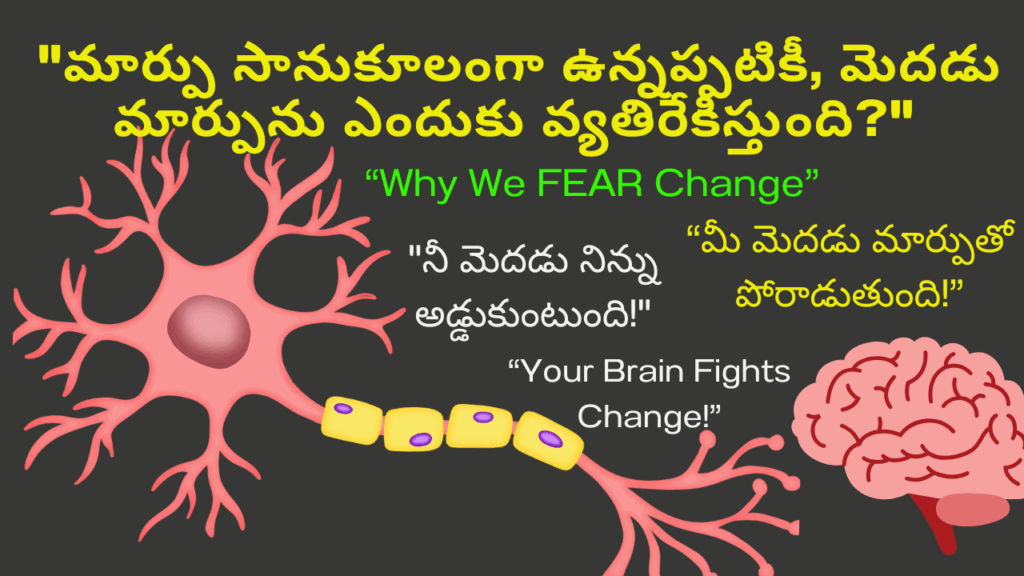
You know the drill. It’s January 1st, or Monday morning, or just another random Tuesday when you decide, “Today’s the day.” You’re going to start that new workout routine, finally launch that side project, or stop biting your nails. You feel motivated, focused, and ready to go. But then, two weeks later, you’re back on the couch, ordering takeout, and wondering what happened. Why is it that even when we genuinely want something better for ourselves—something objectively good—our brains seem to fight us every step of the way? The answer lies deep within your survival wiring, and understanding it is the key to finally making lasting change.
The Ancient Wiring: Safety Over Success
Our brains are masters of efficiency and survival, not necessarily happiness or career success. For tens of thousands of years, the goal was simple: survive the day. Anything new or unknown was automatically flagged as a potential threat. Does starting that new business feel scary? Your modern, evolved brain knows it might lead to financial freedom, but your ancient, reptilian brain remembers that leaving the safe confines of the cave (or the comfort of your current routine) could mean getting eaten. Your brain loves the known, the predictable path, even if that path is miserable. Comfort is mistaken for safety, and this deep-seated evolutionary bias is the primary reason your brain defaults to resisting change.
The Echoes of Childhood and Mental Scaffolding
Beyond biology, our earliest experiences lay the psychological groundwork for how we approach novelty. As children, we develop mental models—scaffolding built from our environment, our parents’ behaviors, and our successes and failures. If you grew up in an environment where mistakes were harshly penalized, your adult brain might automatically associate ambitious action with fear of failure. This creates a deep-seated mental block: It is safer to not try than to try and fail. These early-formed neural pathways become our default settings, telling us which behaviors are “safe” and which are “risky,” regardless of what our adult goals might be.
How Your Adult Self-Talk Solidifies the Pattern
As adults, we don’t always realize we are constantly reinforcing these old patterns through our internal dialogue. That little voice that says, “I’m not good with money,” or “I’m just not a morning person,” isn’t just a casual observation—it’s a powerful, self-fulfilling prophecy. When you repeat these limiting beliefs, you are quite literally telling your brain to strengthen the neural network associated with that identity. This negative self-talk acts like superglue, solidifying the old, unhelpful habits and making it incredibly hard for your brain to accept the new, positive identity you are trying to build.
The Neuroscience of Rewiring: Amygdala vs. Neuroplasticity
At a neuroscientific level, the conflict happens between two key players. The amygdala is the brain’s alarm system. When you attempt something new, the amygdala fires off a threat signal, flooding your system with cortisol and making you feel stressed, prompting you to retreat to the comfort zone. However, we have a powerful counter-weapon: neuroplasticity. This is the brain’s magical ability to reorganize itself by forming new neural connections throughout life. Every time you push past the discomfort and stick with the new behavior (even for five minutes), you create a tiny, fresh pathway. The more you use that new pathway, the stronger it becomes, eventually bypassing the amygdala’s alarm bell entirely.
Practical Steps to Outsmart Your Ancient Brain
Rewiring your brain isn’t just about willpower; it’s about strategy. Here are three practical steps to leverage neuroplasticity:
- Tiny Repetition (The 2-Minute Rule): Don’t try to go from 0 to 60. Make the new habit so small it’s impossible to resist. Want to write a book? Write one sentence. Want to exercise? Put on your running shoes. Consistency, even in small doses, is more important than intensity.
- Visualization and Mental Rehearsal: Before performing the new task, spend a few minutes vividly imagining yourself completing it successfully, focusing on the feeling of accomplishment. This prepares the neural pathways and lowers the threat signal from the amygdala.
- Build a Support System: Surround yourself with people who embody the change you want to make. Observing their success and getting their encouragement normalizes the new behavior, proving to your survival brain that this new territory is safe.
Today’s Choices Shape Tomorrow’s Brain
The struggle against change is real, rooted in both the primal need for safety and the psychological blueprints of your past. But while your childhood experiences built the foundation and your survival wiring established the default, your present-day choices hold the blueprint for the future. You have the power of neuroplasticity in your hands. Acknowledge the resistance, but don’t let it be the boss. Start small, stay consistent, and prove to your brilliant, cautious brain that the future you’re building is not just successful, but safe.


